How Georgia Tech Teaches Resilience and Adaptability in an Uncertain Job Market
By: Tony Rehagen, Photos by Ben Rollins, Joya Chapman | Categories: Featured Stories
By: Tony Rehagen, Photos by Ben Rollins, Joya Chapman | Categories: Featured Stories
Like many college seniors, Ken Grundborg had his life planned out. His father had been an engineer in the U.S. Army Corps of Engineers, and young Grundborg had become infatuated with the field and the service. In 1960, as he neared completion of his undergraduate studies in civil engineering at Georgia Tech, he prepared for his own long career in the Corps.
Fate and the U.S. government had other plans. Before he could even attend his own graduation, the Army sent Grundborg to help rebuild post-war South Korea. When he returned to Tech for his master’s in 1966, it happened again. He was deployed to the active war in Vietnam.
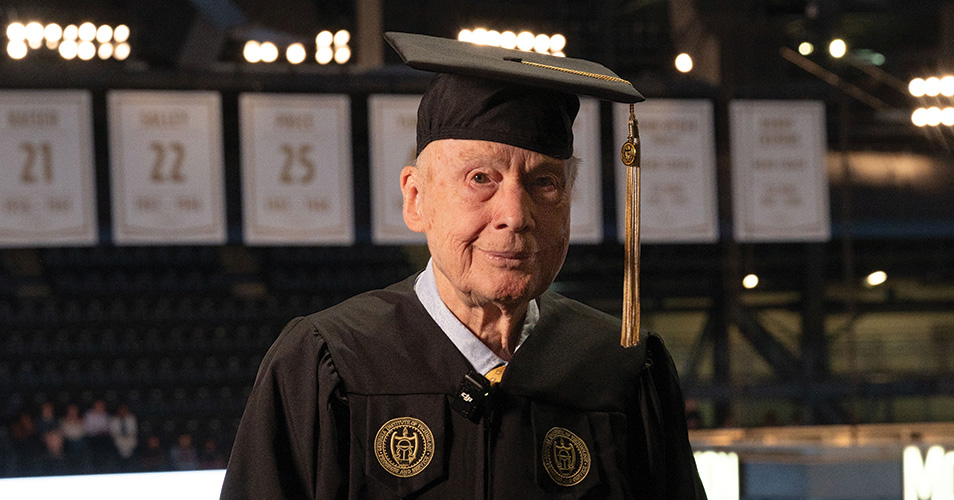
“There were times in my career when I thought, ‘I’m not sure I’m capable of doing this,’” says Grundborg. “But my dad told me: ‘You can do it. It’s just a matter of sticking with it.’”
Although he has two degrees from Georgia Tech, Grundborg thought he’d missed his chance to walk across the stage to receive his diplomas. Sixty years later during Spring Commencement in May 2026, he was able to finally walk across the stage to receive his bachelor’s and master’s diplomas.
That need for resilience and adaptability in the face of sudden change is something many recent Tech grads can relate to. An increasing number of U.S. workers are encountering midstream shifts during their careers that force them to alter—or diverge entirely from—the trajectory they plotted out in college. Some are required to upskill; others shift to other departments or new roles within the same company. Many leave for another employer, or two, within their field. A growing number switch industries altogether.
Today, workers need more than just Grundborg’s old-school persistence. And Georgia Tech is responding by implementing novel ways to prepare graduates academically, mentally, and emotionally for the increasingly uncertain world that awaits.
At the end of 2025, 51% of U.S. employees said they were either actively looking for a new job or watching for opportunities, according to Gallup. Another study, from SideHustles.com, found half of all American workers were considering changing industries. The Wall Street Journal recently reported that 52% of college graduates end up in jobs where their degrees aren’t used.
The root cause, of course, is economics: whether it’s an individual’s search for better pay or a wider shortage of adequate jobs. But the breakneck pace of technology—especially the sea change from AI—is also forcing workers to adapt.
“Some of our graduates do not have everything lined up for their life after graduation,” says Sonia Alvarez-Robinson, associate vice president of Strategy & Organizational Effectiveness at Tech. “The No. 1 stressor expressed by the students in my resilience class is what will happen after graduation, even when they do have things lined up. After four or more years of grueling, intense work; graduation should be a time of relief and celebration. Instead, it can be a time of anxiety about the uncertainty they face.”
Georgia Tech grads do better than most: The Institute is ranked No. 1 for career placement, and average starting salaries of Tech alumni are well above the national average. To keep those numbers high and respond to students’ mounting unease, Tech is expanding their skillsets—and mindsets—to equip them for success.
Georgia Tech grads are also no strangers to upskilling and continued education, especially when it comes to evolving technologies. In fact, Georgia Tech alumni are often the ones driving tech adoption and innovation.
Across sectors, but especially in technology-related fields, artificial intelligence (AI) is replacing some workers and forcing others to continually acclimate at a breakneck pace. In just the first four months of 2026, CNBC reported, over 92,000 tech workers had been laid off, triggering fears of an AI-driven labor crisis.
And research shows that AI is disproportionately impacting new graduates. The 2026 PwC 2026 AI Jobs Barometer report looked at more than 2.4 million entry-level jobs and found that those “most exposed to AI” are seven times more likely to require traditional senior-level skillsets.
To combat this, Tech is moving to bolster the bridge between the classroom and the workplace. For instance, the College of Computing (CoC ) partners with companies, like AT&T, to create a “bootcamp-to-internship” model that introduces students directly to corporate culture as well as the platforms and generative AI tools to ease the transition from student to intern to full-time employee.
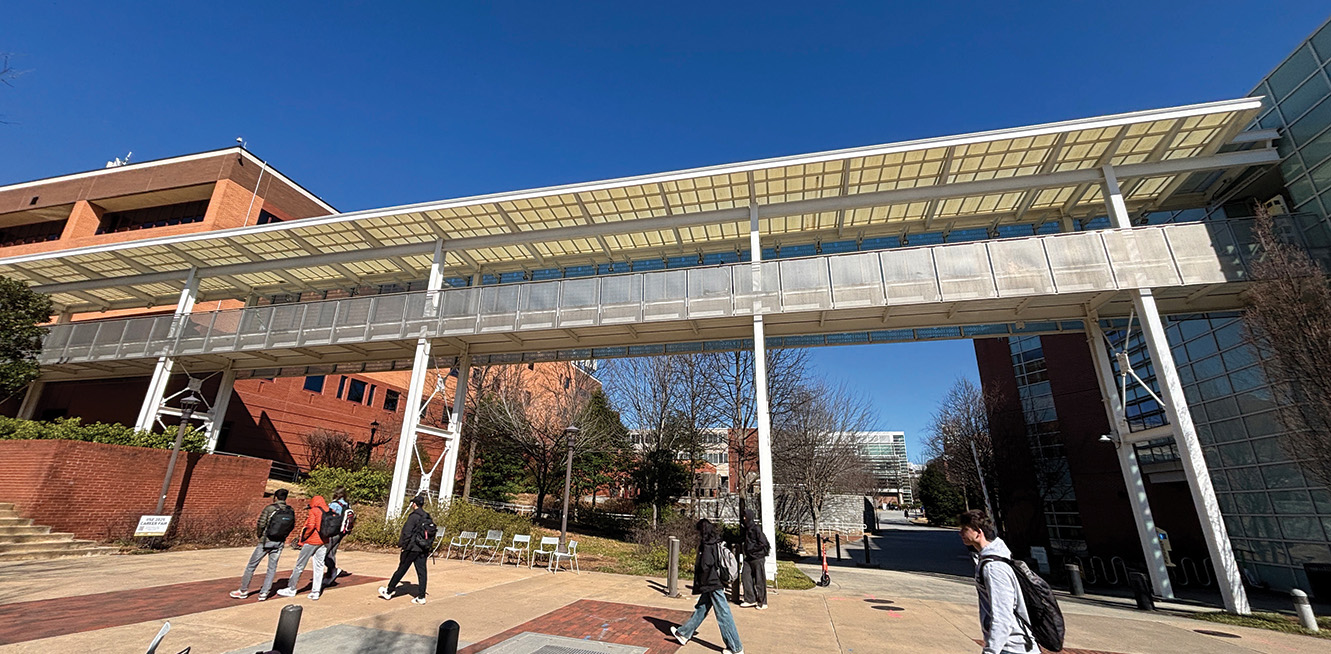
More broadly, the College of Computing is moving to personalize each student’s experience, even those outside of computer science and technology, and encourage them to explore a minor specializing in AI. And this isn’t just Intro to ChatGPT.
“You’re looking at the foundations of AI, and as you gain skills and knowledge in that space, you can reflect on your core major—whether that’s fintech or bioscience—to see where AI intersects,” says Olufisayo Omojokun, CoC’s associate dean for undergraduate education. “There is this notion of ‘AI literacy’ and ‘mastery’ that may or may not have a precise definition. But there is something to be said for teaching as much as we can about the foundations and applications of these tools.”
The mental and emotional challenges posed by a mid-career course change are often as daunting as a gap in skills or education—if not more so.
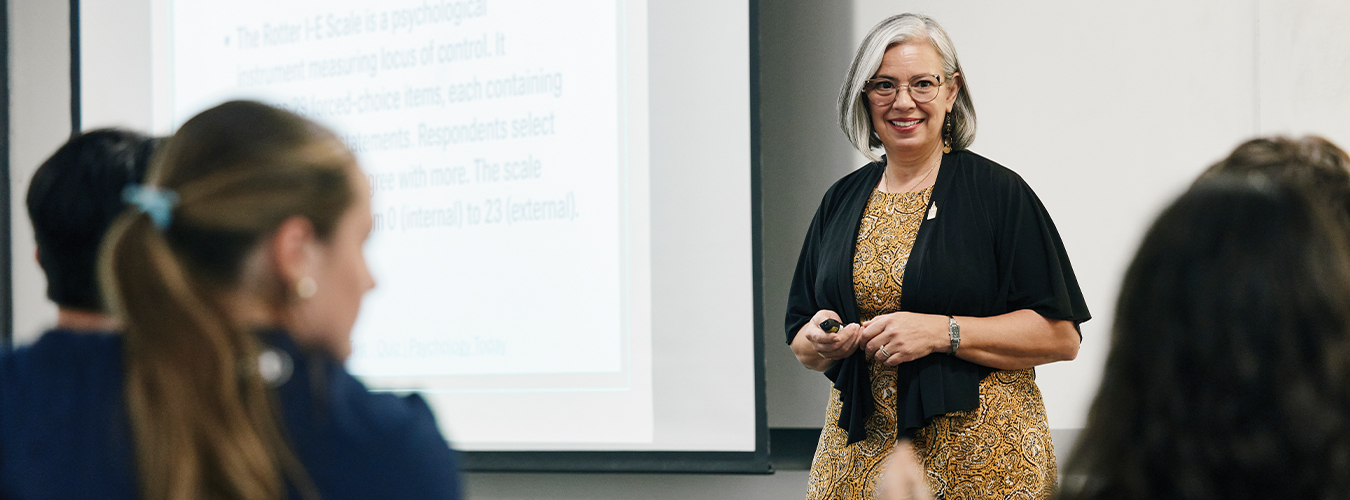
Enter Alvarez-Robinson, who teaches a class in the School of Psychological and Brain Sciences called Strategies for Building Resilience, which focuses on helping students look at resilience through a mental, emotional, and strategic lens. “Resilience isn’t a tool, it’s a muscle,” says Alvarez-Robinson. “And you have to exercise it daily.”
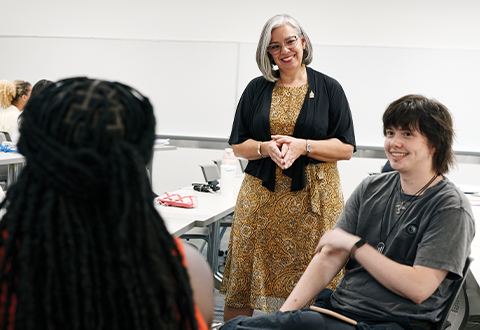 The goal is to use lectures, guest presentations (including experiences from former students), gamified lessons, case studies, and small-group discussions to help each student develop a customized resilience plan to deal with adversity as it arises in their personal and professional lives.
“I have students contemplate the challenges they might face moving forward: looking for a job, moving to a new city, being away from friends, the responsibility of adulting…” she says. “One strategy we teach is to make a list of worries and decide which you can control, partially control, or have no control over at all.”
The strategies are often relevant and timely for students when they leave Georgia Tech and enter the workforce. Derek Prusener, BME 22, senior product planning specialist at Medtronic, took the resilience class his final semester before graduation.
“As I prepared for an out-of-state move and starting a full-time job, the reflections and discussions we did as a part of the class helped me realize the resiliency practices I had already developed through my college experience so that I felt more prepared to take on challenges and uncertainty in post-grad life,” Prusener says.
The class also discusses the three key domains of adaptability, or the ability to pivot when things don’t go as planned.
The first domain is Cognitive, or having the mental flexibility to change how you think and create alternative paths for new scenarios. Adapting cognitively could mean reframing setbacks as learning opportunities, creating alternative plans, and dealing with ambiguity and uncertainty in healthy ways.
The second domain is Emotional, or staying calm and focused in crisis and rebounding with optimism after a setback. This includes avoiding overreacting to stressors.
The final domain is Resourcefulness, or continuous learning, upskilling, and creative problem-solving. Resourcefulness is about looking for the tools to get through a difficult situation. That could include technologies. As AI changes the way we work, a resourceful person might pursue new skills and knowledge to grow and advance, Alvarez-Robinson says.
This last point is also a focus of something Associate Dean Omojokun says they are trying to impress on all students: a spirit of entrepreneurship.
“That mindset is not just for the student looking for seed funding or venture capital, it’s about identifying problems that matter and seizing opportunities when they arise,” says Omojokun. “It’s about building entrepreneurial confidence, the confidence to explore. Entrepreneurs fail, early and sometimes often. How do we learn from those failures? And more importantly, how does our fear of failing diminish or, hopefully, go away?”
Students are also encouraged to tap into the vast network of alumni who, collectively, have faced and overcome just about any career obstacle imaginable. That includes Grundborg, who spent 29 years with the Corps before another career change, transitioning to a private engineering firm.
“Throughout my career, I had assignments that I tried to get out of. I didn’t think I was the person for that or fit for what they were looking for,” says Grundborg. “But in every case, I went (I didn’t have a choice), and there is no assignment that I had that I didn’t enjoy when I got there. Every assignment I had, I learned. Learned about people and different ways to do things. But you can’t give up. That’s the worst thing you can do.”